

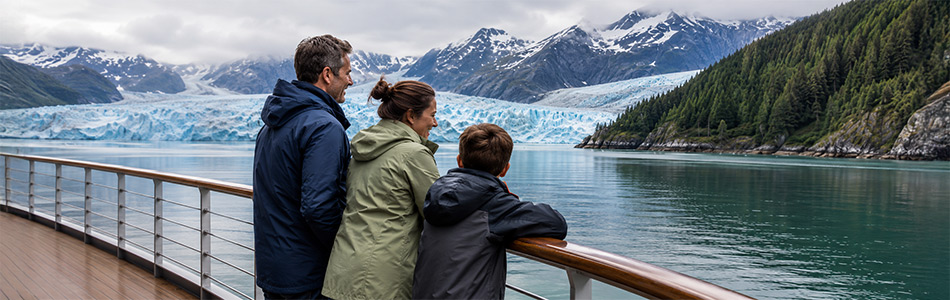
Find straightforward answers about Alaska cruise seasons, weather, itineraries, wildlife, cabins, documents, shore excursions, airfare, accessibility, and vacation planning.
Planning your first Alaska cruise? Start with timing, itinerary style, travel documents, and the experiences that matter most to you. AlaskaCruises.com specialists can also help compare ships, routes, cabins, and cruisetours.
The main Alaska cruise season runs from May through September. Exact opening and closing dates vary by cruise line and itinerary, but most sailings operate from mid-May through mid-September.
Every part of the season has advantages. May and September often bring lower prices and fewer crowds, while June through August offer the longest days, the broadest itinerary selection, and popular family travel dates.
Most cruise-season days are comfortable, but conditions can change quickly near glaciers, on the water, and between ports. Pack layers, a waterproof outer jacket, and clothing for both cool mornings and milder afternoons.
Alaska has very long daylight hours during the cruise season, especially in June and July. It still gets darker in Southeast Alaska, but twilight can last late into the evening. Farther north, summer daylight lasts even longer.
May and September frequently offer attractive shoulder-season pricing. Fares still vary by ship, cabin, itinerary, and demand, so comparing several departure dates can reveal better value.
Alaska is served by contemporary, premium, luxury, expedition, and small-ship cruise lines. Options commonly include Carnival, Celebrity, Holland America, MSC, Norwegian, Princess, Royal Caribbean, Disney, Cunard, Oceania, Regent Seven Seas, Silversea, Seabourn, Viking, and smaller expedition operators. Availability changes by season.
Yes. Small ships and expedition vessels can explore narrow waterways, remote communities, and wilderness areas that larger ships may not visit. They usually offer a more intimate experience and may include guided outdoor activities, but often cost more per person.
Seven-night cruises are the most common. Shorter and longer sailings are also available, and cruisetours can add several inland days in destinations such as Denali, Anchorage, Talkeetna, and Fairbanks.
A balcony can be especially valuable in Alaska because scenery may remain visible for much of the day. It provides a private place to watch mountains, wildlife, coastal communities, and glacier areas. It is not essential, however, because ships also have open decks and public observation spaces.
Either side can provide excellent views. Ships often rotate or change position during scenic cruising so guests on both sides can see the glacier. Open decks and forward observation areas usually provide the widest views.
An Alaska cruisetour combines a cruise with a guided or packaged land vacation. Depending on the itinerary, inland travel may include rail or motorcoach transportation, hotel or lodge stays, and visits to Denali, Anchorage, Talkeetna, Fairbanks, or the Yukon.
Denali is inland and is not visible from a typical Inside Passage cruise. To visit the Denali area, choose a cruisetour or arrange an independent land extension. Views of the mountain depend on weather and are never guaranteed.
Depending on the itinerary, you may see glaciers, fjords, coastal mountains, evergreen forests, waterfalls, historic ports, Alaska Native cultural sites, and wildlife such as whales, eagles, seals, sea lions, bears, moose, and otters.
Whale sightings are possible throughout the cruise season. Humpback whales are commonly seen in Southeast Alaska from late spring into early fall, while orca sightings are less predictable. A guided whale-watching excursion usually improves your chances.
Yes. Guided fishing excursions are available from many Alaska ports, with opportunities varying by location and season. Salmon and halibut are popular targets. Confirm whether licenses, gear, fish processing, and shipping are included before booking.
Shore excursions are optional, but they can provide easier access to glaciers, wildlife areas, rail journeys, flightseeing, fishing, kayaking, cultural attractions, and remote locations. Popular or capacity-limited tours should be reserved early.
Alaska can be an excellent family destination. Many ships offer children's programs and family-friendly cabins, while ports provide wildlife, outdoor, educational, and cultural experiences. Match the ship and excursions to your children's ages and activity levels.
Dress in layers and bring a waterproof jacket, comfortable walking shoes, warm mid-layers, a hat, light gloves, and sun protection. Evening dress varies by cruise line, but Alaska sailings are generally more casual than many other cruise destinations.
Alaska cruises are available across a wide range of budgets. The base fare generally includes your cabin, many meals, entertainment, and transportation between ports. Budget separately for taxes and fees, gratuities, drinks, specialty dining, airfare, hotels, and shore excursions.
Casino hours depend on the ship, itinerary, and local regulations. Casinos are generally closed while a ship is in port and may open only when the vessel is sailing in permitted waters. Check the daily onboard schedule for exact hours.
Protected Inside Passage routes can be relatively calm, but open-ocean sections may be rougher. Travelers prone to motion sickness should speak with a healthcare professional before sailing and choose a midship cabin on a lower deck when possible.
You can research and request a quote online or work with an Alaska cruise specialist. A specialist can help compare ships, glacier routes, ports, cabins, promotions, airfare, and cruisetours based on your schedule, budget, and priorities.
Book early for peak summer dates, balcony cabins, accessible rooms, family cabins, adjoining rooms, cruisetours, and limited-capacity excursions. Travelers with flexible dates may still find later offers, especially during May or September.
Travel insurance can help protect against covered cancellations, delays, medical emergencies, baggage problems, and evacuation costs. Benefits, exclusions, and pre-existing-condition rules vary, so review the policy carefully before purchasing.
Requirements depend on citizenship, residency, cruise itinerary, departure port, and whether the sailing visits Canada. Every traveler is responsible for carrying the correct documents. A valid passport is strongly recommended, and some travelers may also need a visa or other authorization.
Verify requirements with the cruise line and the appropriate government agencies before final payment and again before departure.
Many ships offer accessible cabins and public spaces, but availability is limited and port access can vary. Tender ports, rail cars, motorcoaches, lodges, and excursions may have different restrictions. Notify the cruise line early and confirm each part of the trip before booking.
You can book flights independently or through the cruise line. Compare schedule flexibility, baggage fees, transfers, change rules, and travel protection. Whenever possible, arrive at the embarkation city at least one day before the cruise.
Yes. Many travelers add pre- or post-cruise time in Seattle, Vancouver, Anchorage, or nearby regions. You can also add a cruisetour or independent inland trip to destinations such as Denali, Talkeetna, Fairbanks, or the Kenai Peninsula.

Explore 100+ colorful pages of Alaska photos, cruise tips, and planning inspiration.