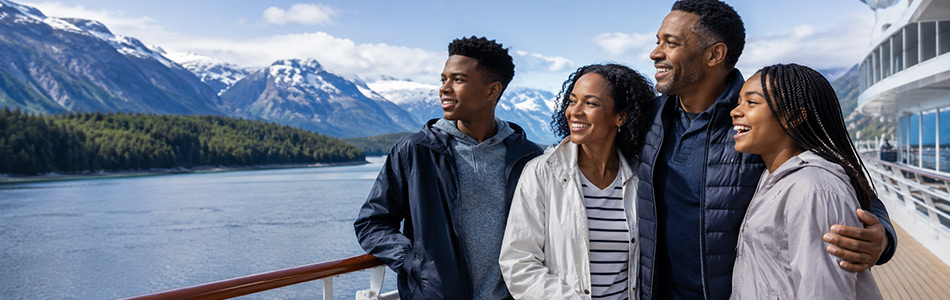
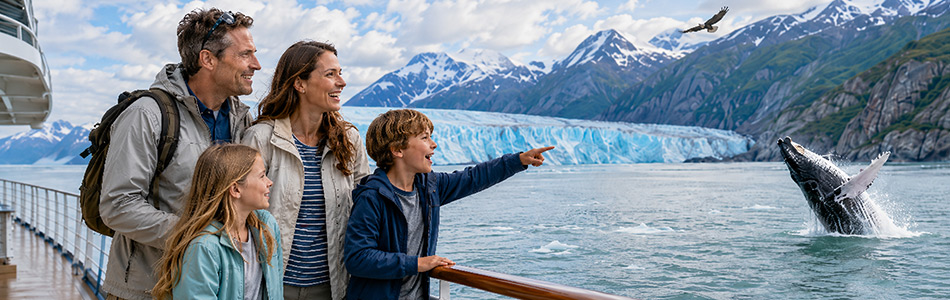
Alaska gives kids something that most vacations cannot: real wilderness.
Alaska Cruises with Kids - Watching a glacier calve into the sea, spotting a humpback whale from the ship's deck, or standing next to a bald eagle in the wild are the kinds of moments that stay with children for the rest of their lives. And a cruise is, practically speaking, one of the most manageable ways to experience it as a family.
From glacier viewing and whale watching to bald eagles and mountain scenery, Alaska gives kids memorable nature-first experiences.
A cruise keeps family travel manageable: unpack once, meals are handled, and each day brings a new Alaska port or scenic highlight.
Kids, tweens, and teens experience Alaska differently, so cabin choice, excursions, timing, and onboard programming all matter.
Alaska gives kids something that most vacations cannot: real wilderness. Watching a glacier calve into the sea, spotting a humpback whale from the ship's deck, or standing next to a bald eagle in the wild are the kinds of moments that stay with children for the rest of their lives. And a cruise is, practically speaking, one of the most manageable ways to experience it as a family.
You unpack once. Meals are handled. Every morning, you wake up somewhere new. For parents juggling different ages and energy levels, that structure removes a significant amount of the planning friction that makes family travel exhausting. Alaska does the rest.
This guide covers everything families need to know before booking: how to choose the right cruise line, what kids can actually do at each port, how age affects the experience, and what to plan for before you go.

Explore 100+ colorful pages of Alaska photos, cruise tips, and planning inspiration.
Alaska cruises are not for every family, and being honest about that upfront makes this page more useful. A few things to consider before you start comparing itineraries:
Alaska rewards curiosity. The destination is most engaging for kids who are interested in wildlife, nature, and outdoor exploration. It is not a theme park vacation. If your children primarily enjoy pools, structured entertainment, and resort-style amenities, the Alaska environment itself may feel slow to them. That said, the major cruise lines sailing Alaska have made significant investments in onboard programming that gives kids plenty to do even when the scenery is the main event.
The weather is unpredictable. Layered packing and rain gear are not optional. Some excursions run in the rain; others do not. Families who approach this with flexibility and the right gear have a much better time than those who arrive expecting sunshine.
It requires more advanced planning than a Caribbean cruise. Popular excursions sell out months ahead of departure. Passport requirements vary by departure port. Minimum age restrictions affect which activities your children can join. The families who get the most out of Alaska cruises are the ones who do their research before they book.
If your family enjoys the outdoors, tolerates variable weather, and is open to nature-first experiences, Alaska cruises with kids are genuinely excellent. If you are looking for a trip that meets the lowest common denominator across a group, it still works, but with some thoughtful excursion planning.
Age shapes the Alaska cruise experience more than almost any other factor. Here is a practical breakdown by age group:
| Age Group | Onboard Experience | Excursion Access | Planning Tip |
|---|---|---|---|
| Under 3 | Can sail on most large ships, but many kids' club programs require age 3 and potty training. | Port excursion options are very limited. Mostly scenic deck time and onboard activities. | Consider waiting if possible; the trip is harder to manage and kids won't retain the memories. |
| Ages 3-5 | Kids' clubs available on most major lines. | Shore excursion age minimums (typically 4-6) still limit port options. Some whale watching and town walks; helicopter and glacier hikes are generally not available. | Focus on onboard experience and scenic cruising days. Port days are slower-paced. |
| Ages 6-12 | Maximum excursion access, natural sense of wonder, and old enough to follow guidance on active tours. | Full access to most excursions, including dog sledding, glacier walks, and whale watching. | Book popular excursions early. This age group gets the most out of Alaska. |
| Teens 13+ | Can thrive if they enjoy nature and adventure. Involve them in choosing excursions. Many lines have dedicated teen clubs. | Full access, including ZipRider, kayaking, and more adventurous glacier hikes. | Let them help plan the trip. Teens who feel ownership of the itinerary have a much better time. |
The bottom line: ages 6-12 is the sweet spot for excursion access and natural engagement. Teens who enjoy the outdoors often have an exceptional time, especially when they are involved in choosing how port days are spent. Very young children can sail, but parents should set realistic expectations about port limitations.
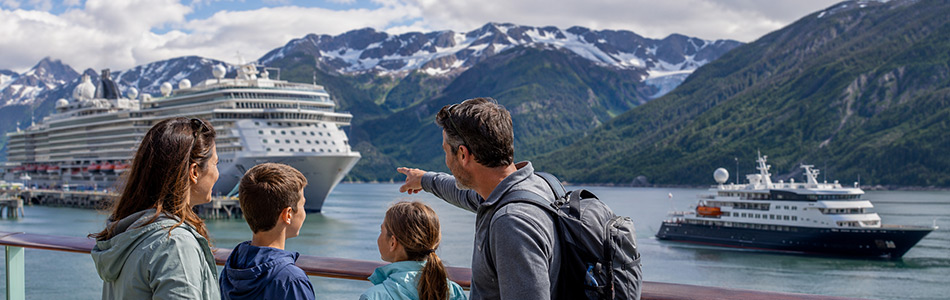
This is a decision point most family planning guides skip over, but it meaningfully changes the type of trip you are planning.
Large ships carry thousands of passengers and offer the full resort experience: kids' clubs, teen clubs, waterslides, multiple dining options, Broadway-style shows, and extensive onboard programming for sea days. They are ideal for families who want structured programming, flexibility for parents to have time apart from children, and a wider range of cabin configurations, including family suites and connecting rooms.
The trade-off is that Alaska ports can feel crowded when several large ships are docked simultaneously. The onboard experience is also more insular; it is easy to spend most of the voyage inside the ship rather than engaging with the destination.
Small ships carry between 60 and 200 passengers and offer a fundamentally different experience. Activities focus on wildlife, kayaking, Zodiac landings, naturalist-led hikes, and direct engagement with the Alaskan environment. These vessels access narrow fjords and remote coves that large ships cannot reach.
Small ships are generally recommended for children aged 6 and older, and many have minimum age requirements of 8. There are no formal kids' clubs; parents are more directly involved in activities, which tends to work well for families who enjoy outdoor exploration together. The atmosphere is more intimate and community-oriented.
The major cruise lines that sail Alaska have invested meaningfully in family programming, but they differ significantly in approach, ship size, and what they prioritize onboard. Use this as a starting point, then follow the links to each cruise line's page for full details.
| Cruise Line | What Families Should Know | Best For |
|---|---|---|
| Norwegian Cruise Line Kids' Crew, ages 2-17 |
Freestyle dining is a practical advantage for families with unpredictable schedules and picky eaters. Norwegian Bliss and Encore are among the largest ships in Alaska, with go-kart tracks, laser tag, and waterslides. Complimentary kids' club with age-specific programming. | Families who want maximum onboard activity and dining flexibility |
| Royal Caribbean Adventure Ocean, ages 3-17 |
Adventure Ocean kids' program is well-regarded, with separate spaces for different age groups including dedicated teen areas. Ships sailing Alaska include rock climbing walls and ice skating. Strong excursion lineup in key ports. | Active families with a mix of ages, including teens |
| Disney Cruise Line Oceaneer Club, ages 3-12; Edge for tweens; Vibe for teens |
The gold standard for younger kids. Character experiences, rotational dining, Broadway-style shows, and exceptional youth clubs. Disney Wonder sails round-trip from Vancouver, so passports are required. One of the more expensive options, but highly rated by families. | Families with younger children who are Disney fans |
| Princess Cruises Camp Discovery, ages 3-17 |
Long-standing reputation as a premier Alaska line. More destination-focused than entertainment-focused, with Alaska-themed kids' programming and the Junior Ranger program in Glacier Bay. Good balance of onboard activity and port depth. | Families who want the Alaska experience to be the centerpiece, not the ship |
| Holland America Club HAL, ages 3-17 |
Kids' club includes National Park Service Junior Ranger programming exclusive to Holland America Alaska sailings. Mid-sized ships have a quieter atmosphere. Strong shore excursion options. Best for families who appreciate a more educational, culturally rich experience. | Multigenerational families and families with kids who love learning |
| Carnival Camp Ocean, ages 2-17 |
Camp Ocean accepts toddlers as young as 2 without potty training requirements, which is uncommon. Casual atmosphere with flexible dining. Spirit-class ships sail round-trip from Seattle, visiting Juneau, Skagway, Ketchikan, and Tracy Arm Fjord. Good value for families. | Budget-conscious families and those traveling with toddlers |
Shore excursions are where Alaska cruise itineraries live or die for families with children. The experiences available at each port vary significantly, and many of the most popular activities have age or weight minimums that affect planning. Here is what families should know at each major Alaska port of call:
| Port | Kid-Friendly Excursions | Notes |
|---|---|---|
| Juneau |
|
Most popular port for families. Book whale watching and dog sledding as early as possible; both sell out quickly in peak season. |
| Ketchikan |
|
Rain is common; the lumberjack show is a reliable covered option. Good port for younger kids with limited excursion options. |
| Skagway |
|
White Pass Railway is the standout for all ages. Gold panning is a reliable hit with kids. The historic town is walkable. |
| Icy Strait Point |
|
Exclusively operated by the Hoonah Alaska Native community. ZipRider has a minimum age/weight requirement; check before booking. |
A few universal excursion notes for families:
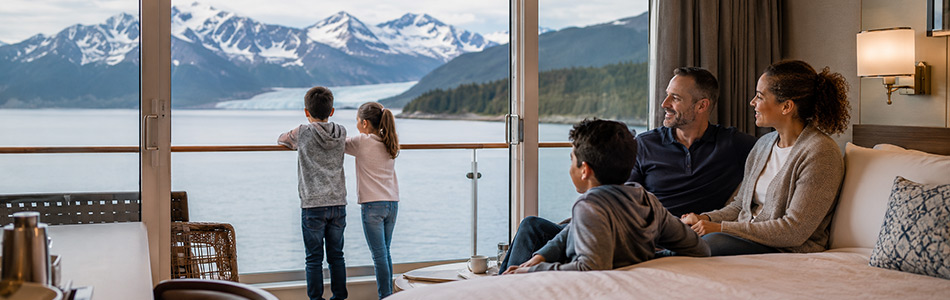
First-time cruising families sometimes have an incomplete picture of what the shipboard experience actually looks like with children. A few things worth knowing before you go:
On the major family-friendly lines, kids' clubs are organized by age group and run throughout the day, including on port days when kids who are not going ashore can still participate. Programs typically cover arts and crafts, games, science activities, and themed events. Participation is optional but tends to be genuinely popular with kids once they settle in.
The minimum age to enroll is 2 or 3 on most large ships, and children are generally expected to be potty-trained. Some lines, including Carnival, accept children as young as 2 without potty training requirements. Verify the specific requirements with your chosen line before booking.
Most major lines offer dedicated teen clubs separate from younger children's programming, typically for ages 13 to 17. These spaces are an important feature for families with teenagers, giving teens their own social environment while parents have flexibility. Norwegian, Royal Caribbean, and Disney are particularly well-regarded for their teen programming.
Most family-friendly lines offer kids' menus alongside main dining, and flexible dining formats like Norwegian's Freestyle Dining allow families to eat when and where works best for them rather than adhering to fixed seating times. This is especially useful for families with younger children who may not make it to a 7:30 p.m. dinner seating gracefully.
Standard cabins on most ships accommodate four passengers with two beds and a pull-out sofa or bunk configuration. For families of five or six, family suites are available on some ships but in limited quantities; they typically need to be booked a year or more in advance. Connecting cabins are an alternative that gives more flexibility and an extra bathroom.
Children under 18 are restricted from casinos, bars, hot tubs on most ships, spas, and adult-only shows. This is standard across cruise lines and not something that can be waived. It is worth setting expectations with teenagers before departure.
The Alaska cruise season runs from late April through September. Timing matters more for families than for solo travelers because of school schedules, weather, and excursion availability.
The best months for families. Temperatures are warmest, days are extremely long (Juneau sees nearly 18 hours of daylight in late June), and the concentration of other families onboard means kids have more peers to connect with at the kids' club. This is also peak season, so prices are higher and popular excursions sell out the fastest.
An excellent choice for families who can travel before peak summer. June is prime whale watching season, with humpback sightings common throughout the Inside Passage. Weather is generally good but slightly cooler and wetter than July. Crowds are somewhat lighter.
Shoulder season offers lower prices and smaller crowds, but comes with trade-offs: cooler temperatures, fewer excursion options, and fewer families onboard, which can matter for kids' club attendance. May and September are better suited to families with older children who are less dependent on kids' programming.