
❮ Back
☰ Menu
Menu

Alaska's National Parks

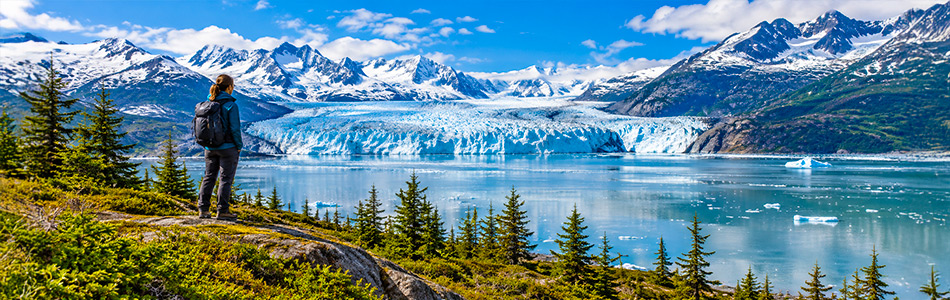
Hiker overlooking a massive tidewater glacier surrounded by Alaska's snowcapped mountains and pristine wilderness.

Discover Alaska's Wild Side

Explore landscapes shaped by ice and time.

Last Updated: October 2026 | Reviewed by: Avril Smith, Staff Writer

Alaska's national parks are home to some of North America's most spectacular natural wonders, including towering mountains, massive glaciers, pristine fjords, and diverse wildlife. Whether you're hoping to see bears in their natural habitat, admire calving glaciers, or explore remote wilderness, these protected landscapes offer unforgettable adventures.

Discover highlights such as Denali National Park, Glacier Bay National Park and Preserve, and Kenai Fjords National Park. Explore your options for an Alaska cruise or a cruise-and-land vacation to experience more of the state's remarkable scenery.

What Are the Best National Parks in Alaska?

Denali National Park


Denali National Park

The Athabascan native people called it "The High One" - and for thousands of years the crowning peak of the 600-mile Alaska Range has humbled those who glimpse its mighty beatuty.

Denali, at 20,320 feet, is the highest mountain in North America. The astonishing peak, also known at Mt. Denali, rises almost alone, 16,000 feet above the snow line, and stands in sharp relief as one of the world's most impressive mountains. The only higher peaks in the worlds are in the Himalayas and the Andes.

This spectacular peak is the landmark of Denali National Park and Preserve. At 6,000,000 acres, the Park is larger than the state of Massachusetts. This is the heart of Alaska, wild and unspoiled, just as it was when the first people looked in wonder and named it Denali. Denali's more than 6 million acres also encompass a complete sub-arctic eco-system with large mammals such as grizzly bears, wolves, Dall sheep, and moose.

Learn more about Denali National Park >

Wrangell - St. Elias National Park


Wrangell - St. Elias National Park

The Chugach, Wrangell, and St. Elias mountain ranges converge here in what is often referred to as the "mountain kingdom of North America." The largest unit of the National Park System and a day's drive east of Anchorage, this spectacular park includes the continent's largest assemblage of glaciers and the greatest collection of peaks above 16,000 feet. Mount St. Elias, at 18,008 feet, is the second highest peak in the United States.

Adjacent to Canada's Kluane National Park, the site is characterized by remote mountains, sweeping valleys, wild rivers, and a variety of wildlife.

Kenai Fjords National Park


Kenai Fjords National Park

Sweeping from rocky coastline to glacier-crowned peaks, Kenai Fjords National Park is one of Southeast Alaska's most scenic attraction. A dayboat cruise through the park's long, steep-sided, glacier-carved valleys fives you an up-close look at abundant wildlife. Watch for bald eagles, listen to the sound of thousands of seabirds and share the waters with Stellar sea lions, harbor seals, Dall's popoises, sea otters and whales.

The gateway to Kenai Fjords is the scenic town of Seward. At the head of dramatic Resurrection Bay, towering Mt. Marathon provides a breathtaking backdrop for a historic downtown district filled with quaint shops.

Learn more about Seward >

Glacier Bay National Park


Glacier Bay National Park

How does it feel when a monumental chunk of ice splits off a glacier and crashes into the sea? The sound is like thunder. The impact shoots water hundreds of feet into the air. You hold your breath as you catch the moment on film. Then you wait for it to happen again. And it does. Glacier Bay has more active calving glaciers than anywhere else in the world.

Cruise by Reid and Lamplugh glaciers to the might John Hopkins - surrounded by rugged peaks and sheltering a seal pupping ground. Linger at Grand Pacific and Margerie glaciers for the grandest spectacle of them all. Margerie is an Ice Age giant a mile wide and 25 stories high. You will marvel at nature's unrelenting power as you witness the birth of one massive iceberg after another.

Wildlife
Search for humback whales returning from their wintering grounds near Hawaii, killer whales feeding in the park's near-shore waters, Steller sea lions resting on rocky islands, and harbor seals nurturing their pups. Glacier Bay is the setting for an unforgettable wildlife search.

Learn more about Glacier Bay >

Gates of the Arctic National Park


Gates of Arctic National Park

You know you must be heading somewhere incredible when you have to pass through stone gates thousands of feet high to get there-and the Gates of the Arctic National Park and Preserve more than lives up to its promise. The park's dramatic title was coined by legendary wilderness advocate and far-north explorer Robert Marshall, who described two peaks, Frigid Crags and Boreal Mountain, as the gates from Alaska's central Brooks Range into the arctic regions of the far north.

As any trip to the park will attest, Marshall wasn't just exercising poetic license. The gates lead to a labyrinth of glaciated valleys and forbidding, snowcapped peaks, of innumerable rivers running rampant through a landscape populated by caribou, sheep, wolves, and brown bears. Wind, water, ice, and plate tectonics all played a part in sculpting the park's wildly varied landscape. Southerly foothills run smack into rows of mountains averaging 4,000 feet, some of which climax in peaks soaring to more than 7,000 feet high. At the Arctic Divide, the story is played out in reverse, culminating in tundra plain that stretches to the Arctic Ocean.

National Parks in the Canadian Rockies

Kluane National Park


Kluane National Park

Visit part of the Great Land few ever see. Kluane may be far off the beaten track, but it's a must for adventurous travelers. This UNESCO World Heritage site encompasses towering Mt.Logan, less than 800 feet shy of Mt. Denali's height, and five of the seven next tallest peaks in North America. It's blessed with magnificent wilderness and diverse and abundant wildlife.

You're sure to find your perfect adventure on a visit to Kluane. Break out your hiking boots on the challenging ascent to King's Throne. Test your mettle in class III and class IV rapids on the famed Tatshenshini River. Stretch your horizons on a flightseeing trip over permanent icefields. Enjoy a tranquil day of lake fishing or a scenic stroll on the Rock Glacier Trail.

Banff National Park


Banff National Park

Each year, millions of visitors come to Banff to marvel at the emerald waters of Lake Louise, walk amongst the flower-filled heavens at Sunshine Meadows, and drive beneath the towering jagged peaks lining the Icefields Parkway.

Snow-capped peaks, glistening glaciers and sweeping vistas are just one part of the allure of Banff National Park. You can enjoy all the comforts of home in the town of Banff and the village of Lake Louise, or step out into the wilderness and the home of some of North America's wildest creatures, including grizzly bears, caribou and wolves.

Jasper National Park


Jasper National Park

Jasper is the largest and most northerly Canadian rocky mountain national park, part of a spectacular World Heritage Site. Comprised of delicate and carefully protected ecosystems, Jasper's scenery is non-the-less rugged and mountainous. In this special corner of Canada you can thrill to the thunder of Sunwapta Falls, enjoy the serene beauty of Mount Edith Cavell, connect with nature along 1,000-plus kilometres of trails, experience Athabasca Glacier up close or just resign yourself to a relaxing soak in Miette Hotsprings.

Jasper joins Banff National Park to the south via the Icefields Parkway. This parkway offers unparalleled beauty as you travel alongside a chain of massive icefields straddling the Continental Divide. The Columbia Icefield borders the parkway in the southern end of the park.

Large numbers of elk, bighorn sheep, mule deer and other large animals, as well as their predators make Jasper National Park one of the great protected ecosystems remaining in the Rocky Mountains. This vast wilderness is one of the few remaining places in southern Canada that is home to a full range of carnivores, including grizzly bears, mountain lions, wolves and wolverines.

Frequently Asked Questions about Alaska's National Parks

Which national parks can I visit on an Alaska cruise?

Glacier Bay National Park and Preserve is a highlight of select cruise itineraries. Kenai Fjords National Park can be explored on boat excursions from Seward, while Denali and Wrangell-St. Elias are generally experienced through land tours. The parks you can visit depend on your cruise route, departure port, and any included land arrangements.

What is the best way to see Alaska's national parks?

Combining a cruise with a land tour is an excellent way to experience Alaska's coastal and inland landscapes. A cruise can bring you close to glaciers and marine wildlife, while a land tour offers opportunities to explore mountain scenery, national parks, and communities in Alaska's interior.

When is the best time to visit Alaska's national parks?

Summer, generally from late May through early September, is a popular time to explore Alaska. Many visitor services and guided excursions operate seasonally, and daylight hours are long. Exact opening dates, wildlife activity, weather, and access vary by park and year, so check conditions before traveling.

Can I see wildlife in Alaska's national parks?

Yes. Depending on the park, season, and conditions, you may spot bears, moose, caribou, Dall sheep, wolves, whales, sea otters, seals, sea lions, and bald eagles. Wildlife sightings are never guaranteed, and visitors should observe animals from a safe distance.

Do I need a guided tour to visit Alaska's national parks?

Not always. Some parks offer visitor facilities, established trails, or guided excursions, while remote areas require extensive preparation and specialized transportation. Guided tours can be especially helpful when traveling to Denali, taking a boat excursion in Kenai Fjords, or exploring unfamiliar terrain.

What should I pack for an Alaska national parks trip?

Pack layers, a waterproof jacket, comfortable walking or hiking shoes, and clothing suited to changing weather. Binoculars and a camera are useful for wildlife viewing and scenic photography. If your itinerary includes remote hikes or specialized excursions, check the operator's equipment and clothing recommendations in advance.

Can I combine Alaska's national parks with Canada's national parks?

Yes, depending on your travel dates, route, and budget. Some travelers combine an Alaska cruise with an extended land vacation, while others plan a separate trip to the Canadian Rockies. Because the destinations are spread across a large region, allow enough time for transportation and check any applicable border-crossing requirements.

Are Alaska's National Parks Suitable for Families and Young Children?

Yes, many of Alaska's national parks offer memorable experiences for families with children of all ages. Families can enjoy scenic views, wildlife spotting, boat excursions, and easy walks surrounded by Alaska's spectacular landscapes. Some parks also feature visitor centers and family-friendly guided activities.

Experience Alaska's Extraordinary Beauty

Few destinations capture the imagination quite like Alaska. Its immense glaciers, dramatic mountain ranges, and pristine wilderness create a setting for truly remarkable experiences. Discover the national parks that define this extraordinary destination and plan a journey that brings you closer to the natural beauty of the Last Frontier.